










Here is some of the essential information you should know about the USMLE Step 3 exam.
What Content Does USMLE Step 3 Cover?
You will typically take Step 3 during your first year of residency. The exam tests your ability to apply medical knowledge and understanding of biomedical and clinical science that is essential to the unsupervised practice of medicine, focusing on patient management in ambulatory settings.
How Is USMLE Step 3 Administered?
Step 3 is a two-day exam. Day One has approximately seven hours in the test session, including 45 minutes of break time. There will be 232 multiple-choice items divided into six blocks. You get one hour to complete each block. The first day focuses on foundations of independent practice, and tests foundational sciences, biostatistics, interpretation of medical literature, patient safety, communication and interpersonal skills and medical ethics.
Day Two has approximately nine hours in the test session, including a minimum of 45 minutes of break time. There will be 180 multiple-choice items, divided into six blocks of 30 items each. You get 45 minutes to complete each block. Day Two focuses on advanced clinical medicine and tests knowledge of patient diagnosis and disease management. Day Two includes computer-based case simulations that test your skills in patient diagnosis and disease management, specifically highlighting your knowledge of patient history, physical examination and the use of diagnostic studies. There will be 13 case simulations with an allotted time of 10 to 20 minutes each.
How Important Is Step 3 of the USMLE?
Step 3 is the final examination in the USMLE series that an aspiring doctor must pass to earn a license to practice medicine in the United States without supervision. Thus, a solid study schedule and a passing score are just as important for Step 3 as they are for the first two exams.
How Is USMLE Step 3 Scored?
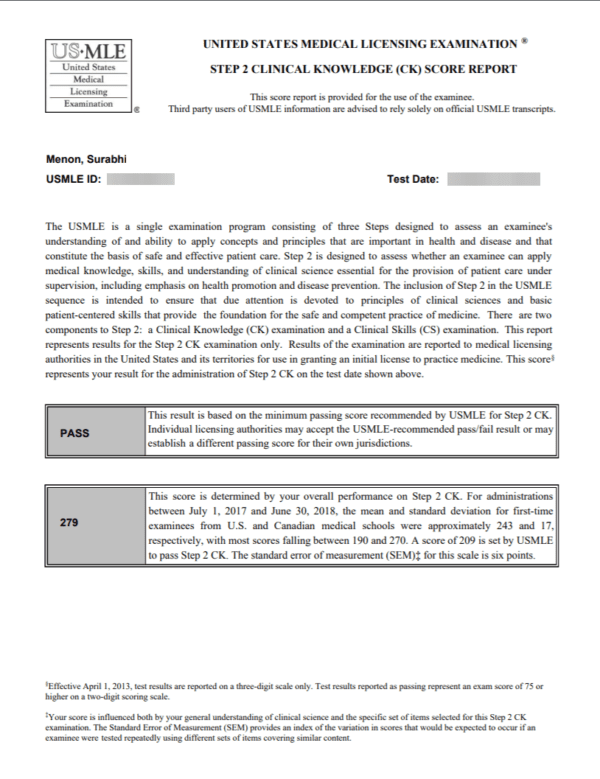
The minimum passing score for Step 3 is 196, and the national average is 226, with a standard deviation of 15. Step 3 is the USMLE exam that is most often underestimated by aspiring doctors. Students who have excelled on Step 1 and Step 2 CK may have challenges with Step 3, given their busy residency schedule, the exam's unique simulation component, or a residency specialty that doesn't utilize the medicine concepts tested in Step 3. If you are pursuing a fellowship, a strong Step 3 performance can help your application stand out.
Discounted Session Sign-Up